
It's a fair question — wrist wraps look like a barbell-lifting accessory, so it's not obvious why a calisthenics athlete would need them. But if you're doing dips, handstand work, or anything loaded through a bent wrist, they solve a problem that shows up more in bodyweight training than most people expect.
Why Wrists Take a Beating in Calisthenics
Unlike a barbell, where your wrists stay in a relatively neutral position, calisthenics constantly puts your wrists into full extension under load: push-ups, dips, handstands, planche work. Your wrist joint ends up supporting your full bodyweight (or more, with a dip belt) at an angle it isn't naturally built to hold for long.
That's why wrist discomfort is one of the most common complaints among people who train dips and handstand skills regularly — it's not a sign you're doing something wrong, it's just the nature of the movements.
What Wrist Wraps Actually Do
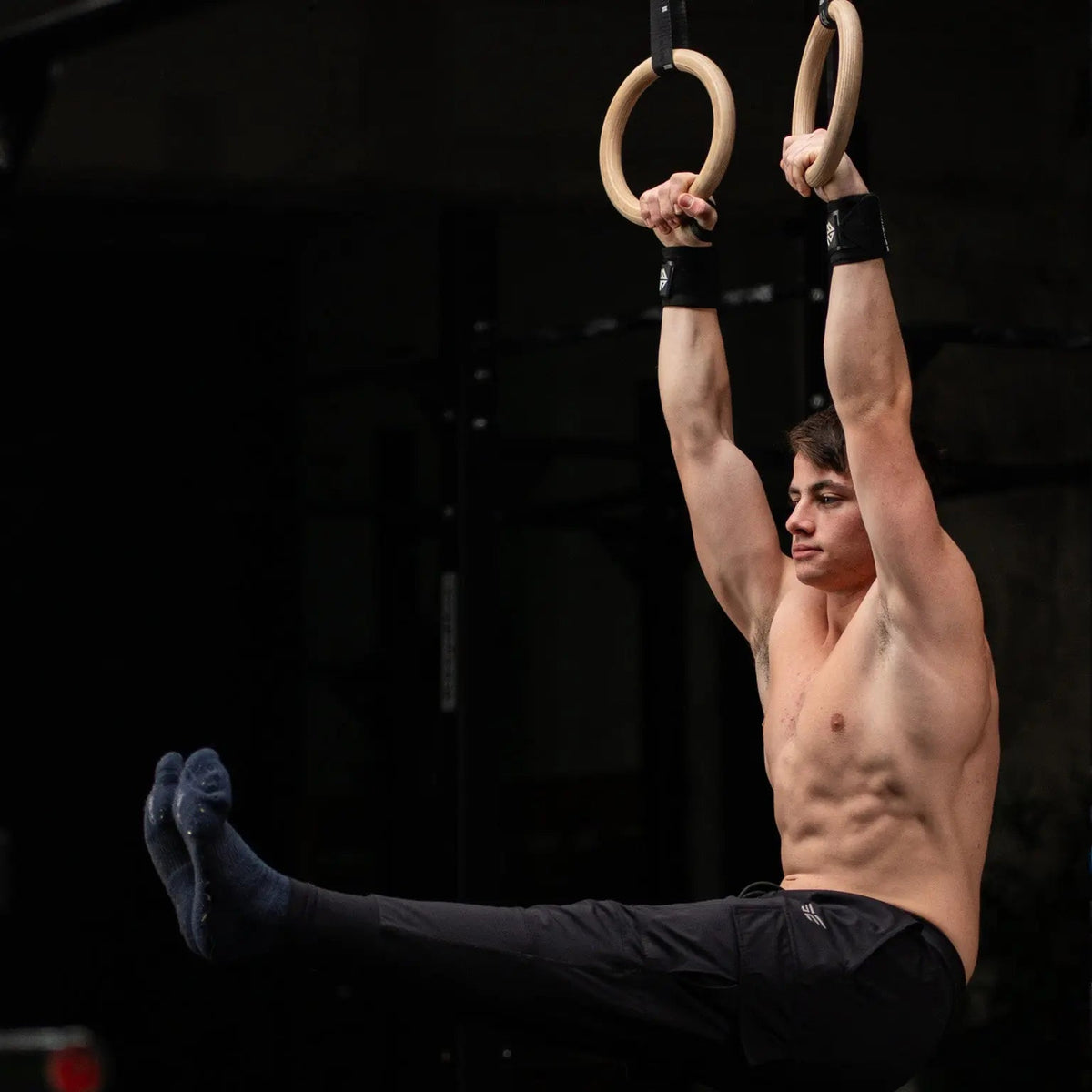
Wrist Wraps add external support around the joint, limiting how far it can hyperextend under load. This does two things:
- Reduces strain during heavy or high-volume sessions — especially relevant if you're using a Dip Belt Pro and adding weight, since more load means more pressure through the wrist joint on every rep.
- Lets you keep training through minor discomfort without it turning into something that sidelines you for weeks. They're not a fix for an actual injury — but they're a legitimate tool for managing normal training wear.
Who Actually Needs Them
You'll likely benefit from wrist wraps if:
- You're doing weighted dips or pull-ups regularly
- You've started noticing wrist ache after push-up or handstand-heavy sessions
- You're working on straight-arm skills — planche progressions, handstand holds — where the wrist is under constant load
You probably don't need them yet if:
- You're new to calisthenics and not yet training high volume
- You don't feel any wrist discomfort during or after sessions
- Your training is mostly pulling-based (rings, pull-ups) rather than pressing-based
There's no downside to introducing them early if you want the extra support — but they're not a mandatory purchase for everyone starting out. Think of them the way a lifter thinks of a weight belt: useful once the load or volume justifies it, unnecessary before that point.
Training dips or handstand work regularly? Check out Wrist Wraps.