
One of the biggest advantages of calisthenics is that you don't need an expensive gym membership. With a few smartly chosen pieces of equipment, you can build a full home training space without spending a fortune on machines that end up collecting dust.
Why calisthenics is so well suited to home training
Calisthenics is all about mastering your own bodyweight. That means minimal space, minimal equipment, and maximum flexibility. Where a home gym with free weights quickly requires hundreds of pounds of plates, calisthenics equipment lets you get by with just a few compact accessories.
The essential equipment for a complete setup
1. Gymnastic rings
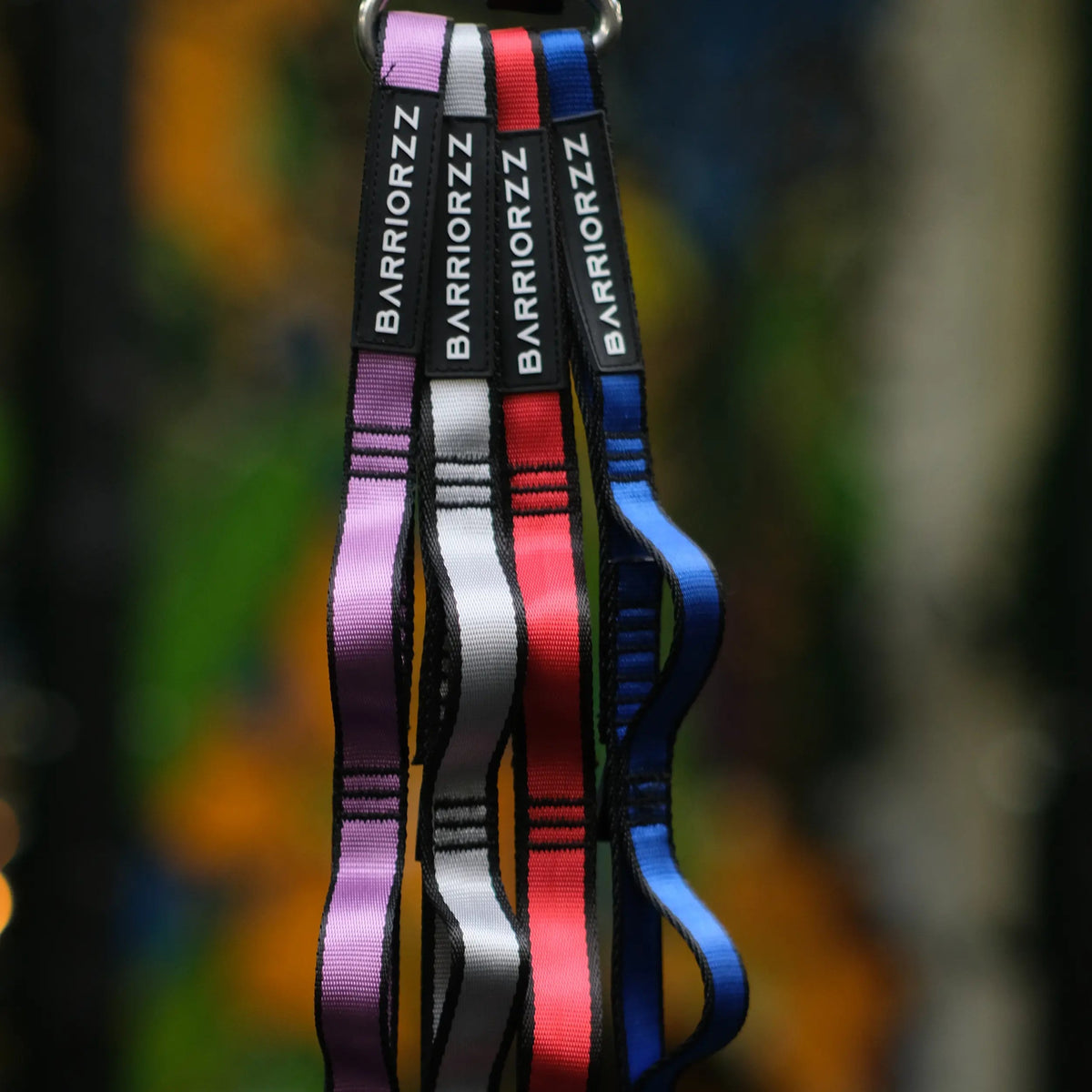
If you only invest in one piece of equipment, make it rings. You can hang them almost anywhere — from a tree, a beam, or a doorway mount — and they let you do virtually every exercise you'd normally need a pull-up bar for: pull-ups, chin-ups, hanging leg raises, and more. The difference is that rings add an instability component on top of that, which recruits your stabilizing muscles even harder. Ring dips, ring rows, and ring push-ups also make them far more versatile than a fixed bar.
2. A dip belt
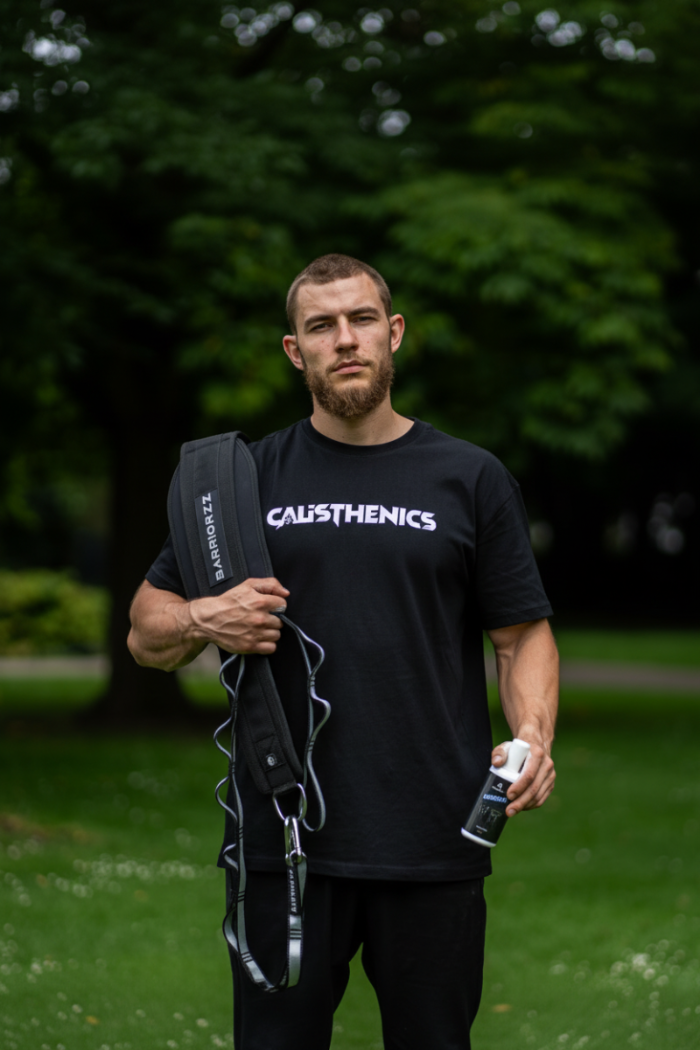
Once bodyweight exercises start feeling too easy, a dip belt is the next logical step. It lets you add extra weight to dips and pull-ups (on the rings) without having to invest in a full set of weights. Our Dip Belt Pro and Premium Dip Belt are among the most popular choices in the community, precisely for this reason.
3. Paralettes
Paralettes are small, raised handles you use close to the ground. They're perfect for training L-sits, planche progressions, and deeper push-ups. Often overlooked, they're incredibly versatile for anyone working on core strength and joint stability.
4. Resistance bands
For anyone not yet strong enough for a full pull-up, or looking for extra resistance on lighter exercises, resistance bands are a cheap and versatile addition.
A sample home setup on a budget
For those just getting started, we recommend the following order of purchase:
- Gymnastic rings (replaces the pull-up bar and more)
- Dip belt (for progressive overload)
- Resistance bands (for assistance and mobility)
- Paralettes (for advanced core and pushing exercises)
This way, you build a complete home gym step by step, without having to invest a large amount all at once.
Conclusion
You don't need a gym membership to make serious progress. With the right equipment, acquired in a logical order, you can create a home training space that's just as effective as any gym. Start with the essentials, expand as you get stronger, and invest in quality gear that grows with your level.